Home / Versus / Salmon (Atlantic) vs Tuna (Canned in Water)
Head to headSalmon (Atlantic) vs Tuna (Canned in Water)
Omega-3s, protein per dollar, and the mercury question.
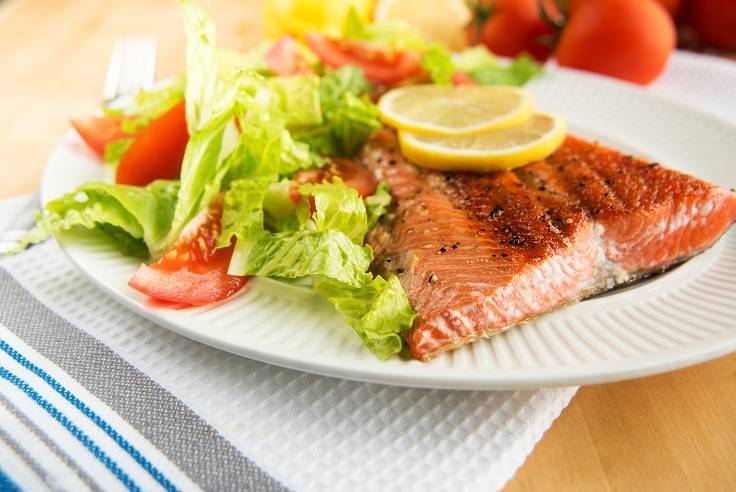
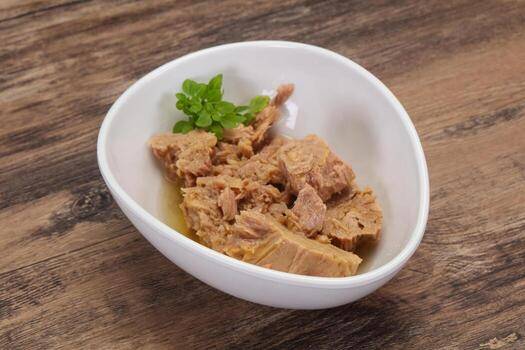
Tuna (Canned in Water) takes it, 69 to 68. A 1-point gap. A protein-per-calorie monster. The mercury is the asterisk. Salmon (Atlantic)’s case: The omega-3 benchmark everything else is measured against. Watch out: Limit albacore to about one serving a week; chunk light is lower in mercury.
Tale of the tape
| Nutrient | Salmon (Atlantic) per 100g | Tuna (Canned in Water) per 100g |
|---|---|---|
| Calories | 206 | 108 ● |
| Protein | 22g | 23.6g ● |
| Total Fat | 12g | 1g ● |
| Saturated Fat | 2.7g | 0.3g ● |
| Dietary Fiber | 0g | 0g |
| Sodium | 61mg ● | 247mg |
| Cholesterol | 70mg | 50mg ● |
| Potassium | 490mg ● | 237mg |
Red dot marks the winner of each row. Column bases differ because chain labels are per serving — the per-100-calorie comparisons below put them on equal footing.
Where Salmon (Atlantic) wins
- Salmon (Atlantic) has less sodium per 100 calories (Tuna (Canned in Water) has more).
- Vitamin D: 55% DV vs Tuna (Canned in Water)’s 8% DV (per 100g).
Where Tuna (Canned in Water) wins
- Tuna (Canned in Water) has 2.0x the protein of Salmon (Atlantic) per 100 calories.
- Tuna (Canned in Water) has less saturated fat per 100 calories (Salmon (Atlantic) has more).
- Selenium: 146% DV vs Salmon (Atlantic)’s 44% DV (per 100g).
Questions
Is Salmon (Atlantic) healthier than Tuna (Canned in Water)?
By our scoring, Tuna (Canned in Water) grades higher (69 vs 68). The full nutrient comparison is in the tale of the tape above.
Which has more protein, Salmon (Atlantic) or Tuna (Canned in Water)?
Salmon (Atlantic): 10.7g per 100 calories. Tuna (Canned in Water): 21.9g per 100 calories.
How many calories are in Salmon (Atlantic) vs Tuna (Canned in Water)?
Salmon (Atlantic): 206 calories per 100g. Tuna (Canned in Water): 108 calories per 100g.