Home / Versus / Ketchup vs Yellow Mustard
Head to headKetchup vs Yellow Mustard
Sugar against basically nothing — the condiment aisle’s most lopsided fight.
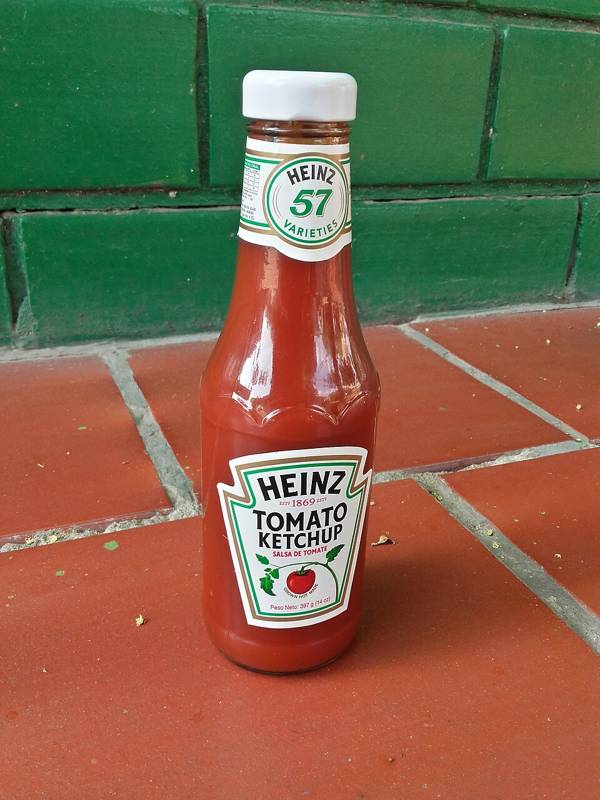

Yellow Mustard takes it, 45 to 16. A 29-point gap. Ballpark diplomacy in a squeeze bottle. Ketchup’s case: Tomatoes, sugar, and America's collective childhood.
Tale of the tape
| Nutrient | Ketchup per 100g | Yellow Mustard per 100g |
|---|---|---|
| Calories | 101 | 60 ● |
| Protein | 1g | 3.7g ● |
| Total Fat | 0.1g ● | 3.3g |
| Saturated Fat | 0g ● | 0.2g |
| Dietary Fiber | 0.3g | 4g ● |
| Total Sugars | 21.3g | 0.9g ● |
| Sodium | 907mg ● | 1100mg |
| Cholesterol | 0mg | 0mg |
| Potassium | 281mg ● | 152mg |
Red dot marks the winner of each row. Column bases differ because chain labels are per serving — the per-100-calorie comparisons below put them on equal footing.
Where Ketchup wins
- Ketchup has less sodium per 100 calories (Yellow Mustard has more).
Where Yellow Mustard wins
- Yellow Mustard has 6.2x the protein of Ketchup per 100 calories.
- Yellow Mustard has 22.4x the fiber of Ketchup per 100 calories.
- Yellow Mustard has less sugar per 100 calories (Ketchup has more).
Questions
Is Ketchup healthier than Yellow Mustard?
By our scoring, Yellow Mustard grades higher (45 vs 16). The full nutrient comparison is in the tale of the tape above.
Which has more protein, Ketchup or Yellow Mustard?
Ketchup: 1g per 100 calories. Yellow Mustard: 6.2g per 100 calories.
How many calories are in Ketchup vs Yellow Mustard?
Ketchup: 101 calories per 100g. Yellow Mustard: 6 calories per 100g.
A note before you eat your screen: grades are computed from published nutrition data with a transparent formula. They are a starting point for thinking about food, not medical advice. Talk to your doctor or a registered dietitian about your diet.